

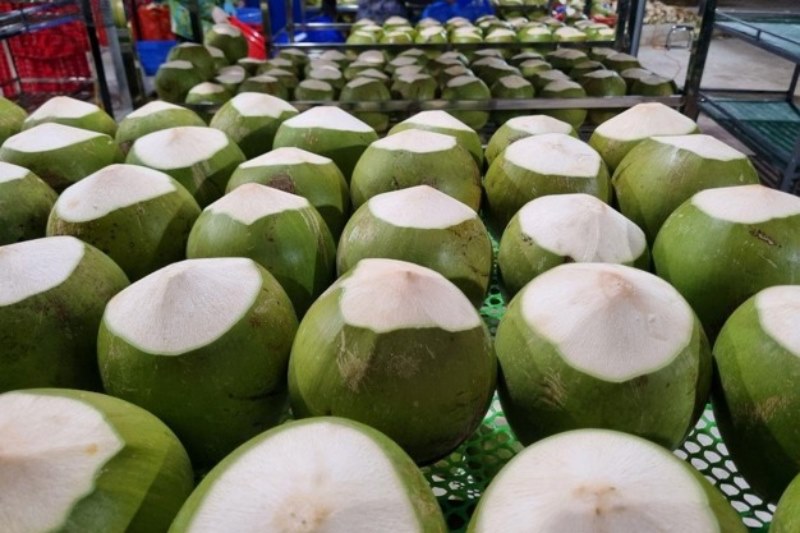
Finding a supplier is easy. Finding one you can trust once containers, timelines, and customer expectations are involved is where things get harder. That is why choosing a fresh Thai coconut supplier is not really about who answers first or who sends the cheapest quote. It is about who can keep quality steady, communicate clearly, and handle export requirements without turning every shipment into a guessing game.
Thai coconuts are attractive to overseas buyers for obvious reasons. The product already has a strong reputation, especially when it comes to aromatic young coconuts such as Nam Hom. A supplier in this space needs to understand that buyers are not only looking at the fruit itself. They are also looking at handling, shelf life, packing standards, and whether the business behind the product seems capable of supporting repeat orders.
The first thing worth looking at is whether the supplier understands export work properly. Selling coconuts locally is one thing. Supplying export orders is another. Once fruit is moving across borders, the details matter far more. Trimming, packing, temperature control, shipping windows, and documentation all become part of the product. A supplier may have good fruit, but if the process around it is weak, the buyer still ends up with a problem.
This is where the decision should become more practical. Instead of asking only whether the coconut looks good in a photo, buyers should think about what happens between harvest and arrival. Can the supplier keep standards consistent across repeat orders? Can they explain lead times clearly? Do they understand the difference between supplying retail-ready formats and bulk export shipments? These are the kinds of things that shape whether the relationship actually works.
A few checks usually tell you a lot quite quickly:
- Can the supplier clearly explain the coconut type, trimming style, packing method, and export specification?
- Is the packing and temperature handling already built into the process?
- Is communication direct and timely?
- Do quality expectations stay consistent from one order to the next?
That last point matters a lot. Repeatability is often worth more than a strong first impression. A supplier who performs well once but struggles to maintain the same level on later orders can cause more trouble than a supplier who starts more cautiously but stays dependable. Importers are rarely buying one container as a one-off experiment. Most are looking for a supplier they can work with over time without having to worry about standards slipping.
Another area buyers should pay attention to is how the supplier speaks about specifications and requirements. Good suppliers tend to be clear. They know what they are shipping, how it is packed, what storage conditions matter, and what timelines are realistic. That clarity saves time on both sides. It also makes the buyer feel far more confident that the supplier has handled export work before rather than simply trying to win an order.
Communication is another part of the quality picture. Fresh produce moves quickly, and problems usually become more expensive when updates are late or vague. If a supplier goes quiet when plans change, or answers in a way that creates more confusion than clarity, that becomes a risk in itself. A buyer should not have to chase basic information once an order is in motion.
Choosing well often comes down to trust built through specifics. Clear answers. Stable handling. Realistic lead times. Packaging that suits the destination market. A process that sounds controlled rather than improvised. When a supplier can offer that, the decision becomes much easier, because the buyer is not only purchasing fruit. They are also buying confidence that the shipment will arrive in a condition their customer can actually use.